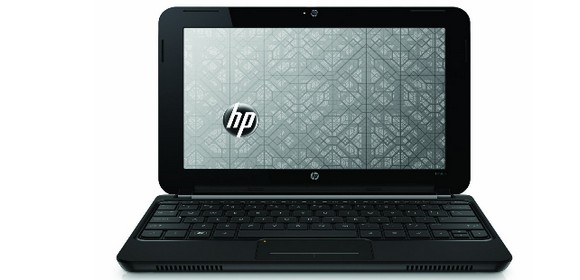
Dell Inspiron M101z netbook ready to reduce your wallet by £379

Dell has created some shelf space for their new Inspiron M101z netbook, an ‘ultra-thin and ultra-portable’ machine which is now available on their UK online store.

Dell has created some shelf space for their new Inspiron M101z netbook, an ‘ultra-thin and ultra-portable’ machine which is now available on their UK online store.

Netbooks have come a long way since the basic offerings of a few years back, and although the initial surge in sales may be relaxing slightly, they’re still very useful things and very much in demand.
With hundreds of different models now competing for your wallet, we’ve taken a look around at the very best and selected four netbooks which we think are in the current cream of the crop.

Charging at you at a rate of knots is Samsung’s new N230 ultra-slim netbook offering an astonishing 13.8 hours battery life.

If you’re not happy with your netbook and the keyboard-less lines of the tablet form aren’t exciting your wallet regions, then Acer are hoping that their tablet/netbook two-in-one hybrid will do the job for you.
Their new Aspire Timeline 1825PT can perform as a regular netbook with a proper QWERTY keypad and touchpad, but with a deft swivel of the 11.6 inch 1366 x 768 HD screen you’re holding a tablet (albeit a rather tubby one). Magic!

Like a Red Bull-supping Duracell bunny on a drip-feed of Colombia’s finest marching powder, Asus’s new EeePC 1015P and EeePC 1015PE netbooks just keep on going.
The company is promising consumers an astonishing battery life of 13.5 hours of autonomous use, thanks to a beefy, built-in 6-cell 63Wh battery pack.

Sony’s original take on a netbook-cum-ultraportable – the ludicrously over priced VAIO P series – failed miserably to impress, but the company aren’t giving up on the concept quite yet, no sir!

Although Mr Jobs and his Apple chums have decided on your behalf that really don’t want a nice, convenient, small netbook running your favourite OS, there appears to be no shortage of folks who really would rather like such a creation.
With no official channels open to anyone wanting the twin joys of Mac OSX and a wee netbook, the team at myMacNetbook have compiled a handy set of guides for filling up those wee cheap PCs with Apple magic.

LG Electronics (LG) have announced the launch of their ultra-thin premium mobile PC, the LG X300 and it’s a rather sleek and stylish looking number.
Their new “flagship mobile computing device,” the LG X300 weighs a mere 970g and is wafer thin at just 17.5mm thick .
There’s no denying that the Nokia Booklet 3G is a mighty purdy thing, with its aircraft-grade aluminium clad lines and shiny looks garnering warm praise from The Independent who frothily declared it, “a triumph of style and industrial design.”
Nokia’s first ever laptop certainly packs in a decent spec sheet too, offering Windows 7, 1 GB RAM, 120 GB hard drive, built-in A-GPS, 3G, and Wi-Fi, plus a 10.1″ HD-ready display.
Read more…

With speculation about Apple’s soon-to-be-announced new product sending fanboys and tech bloggers into squeaky orgasms of expectant delight, McGraw-Hill’s CEO appears to have coughed up some details about the forthcoming ‘Messiah Tablet.’
We have to admit we’re rather keen on Thinkpad laptops – heck, if they’re good enough for the Space Station, they’re good enough for us – so we’re rather looking forward to Lenovo’s new thin and light ultraportable Thinkpad x100e machines.
A little larger than your average netbook, the specs seem to be – as Leslie Phillips would say – ‘bang on’ with the diminutive laptop sporting a 11.1″ 1366 x 768 screen and AMD Athlon Neo MV-40 processor.
Purring along on either Windows 7 Starter, Home Basic, Home Premium or Pro (32 bit or 64 bit flavours), there’s capacity for up to 4GB of RAM, with storage being catered for by 2.5″ 5400rpm HDD drives coming in 160GB, 250GB or 320GB capacities.
We didn’t think this would ever get past the concept stage, but Kohjinsha’s dual 10.1-inch netbook seems to be slowly edging towards reality, with a demo video running wild into the open arms of YouTube.
Packing two stacked 10inch screens that slide out to form one ultra-wide display, the Dual-Display PC isn’t that much thicker than a regular netbook.
Most people with even a passing interest in technology will be familiar with the concept of the netbook.
Small, low-powered laptops designed for basic computing tasks like email, internet, and word processing, netbooks have enjoyed a dramatic growth in popularity over the past couple of years.
Netbooks, schnetbooks. You can’t move for the ruddy things these days, and we get an inbox full of new look-a-like releases every week, but Acer’s latest AS1410 offering caught our eye.
There’s nothing radically different going on of course, but the beefier processor, the upgraded spec sheet and overall package makes it worthy of a closer look.
With netbooks recently overtaking laptops in worldwide sales figures, we were prompted to dig out our trusty old Toshiba Libretto 50 and see how it shaped up to modern rivals.

Released over twelve years ago in January 1997, the Tosh was seen as something of a mini-marvel in its day, being the first mini-notebook computer to both pack an Intel Pentium (hurtling along at 75MHz) and run Microsoft Windows 95.
The Libretto 50 was Toshiba’s second mini-PC, succeeding the Libretto 20 released in the previous April.
The latest l’il Libretto managed to run a full version of the Windows 95 operating system and came with Microsoft Word for Windows 95, Excel, Lotus Organizer 97 and Internet Explorer V3.0 pre-installed.
Recent Comments